When the Lights Came On
A Mutarean Remembers Home
Yaya Nyari
There is no difficulty in deciding which part of Zimbabwe is the best.
It is Mutare.
I accept that others may hold different opinions. They are entitled to them.
We have the climate.
We have mountains that do not simply surround you but seem to absorb you until you slide into the landscape. Mist settles on their tops. The soils are fertile. Vegetation flourishes. Fruit seems sweeter, vegetables juicier.
And we have madhumbe.
That should probably settle the matter.
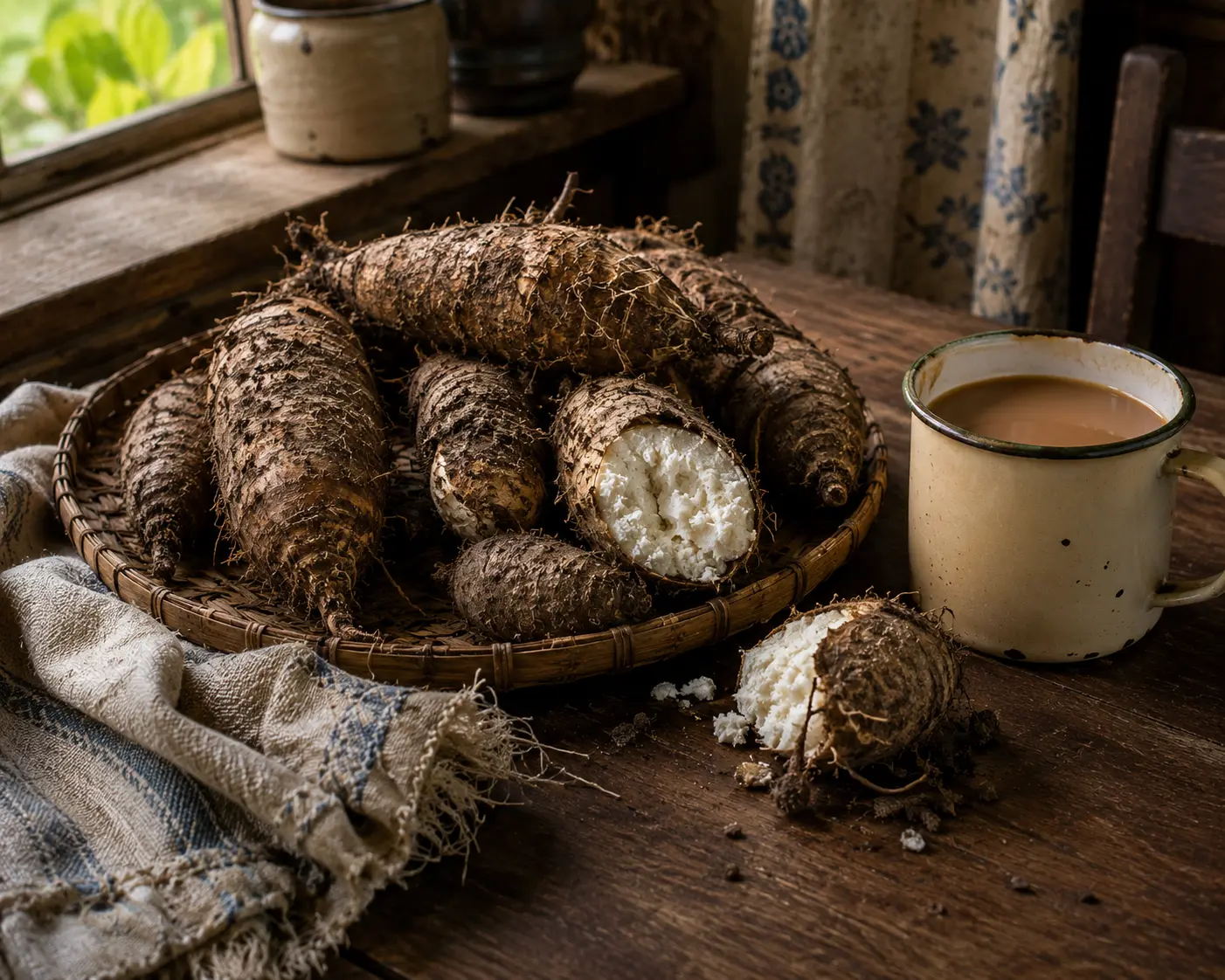
Madhumbe are furry root bulbs that thrive in the wet, sun-warmed soils of our region. Dug from the earth, they emerge with soil tangled amongst their fine hairy roots. We washed them and boiled them until their outer skins peeled easily away, revealing the pale, powdery flesh beneath.
Growing up, I knew only one proper accompaniment.
A cup of tea.
Now people boil, bake and serve madhumbe alongside meat and vegetables. I have eaten them in different ways too. But even here in Britain, where I sometimes find imported ones looking considerably more tired than anything I remember being dug from our soil, I buy them.
I cook them.
I close my eyes.
I don't associate madhumbe with home.
They are home.
Perhaps it is the soil that makes us so convinced of ourselves.
We Mutareans have a reputation amongst other Zimbabweans.
We are vanaSamaz, sometimes anaWasu.
Samaz is the shortened form of Samanyika, one of the names by which people from our part of the country are known. There is also the respectful Sa- by which a man may be addressed. Mr Gondo becomes SaGondo. Mr Kadira becomes SaKadira.
I remain grateful that my lot did not permanently attach the prefix to our surname. Kadira was quite enough for a child learning to write.
My adult brothers, however, will continue answering to SaKadira.
There are plenty of things the rest of the country likes to say about us Samaz.
We are sociable. Warm. Welcoming. Curious about other people and perhaps a little too willing to try everything.
We are also accused of Englishing everything.
Even somebody with very little formal education may find two or three English words and insert them enthusiastically into conversation. Given our history as a border people, and the movement of people, languages, goods and ideas through Mutare, perhaps absorbing things comes naturally to us.
Things arrive.
We look.
We try.
We keep what works.
We are also, we like to think, amongst the nation's chefs. Walk into the kitchens of some of Zimbabwe's reputable hotels, we might tell you, and there is every chance you will find one of ours somewhere near the helm.
Our men can cook too.
Better than the women, some would claim.
I shall leave that one there.
Then there is our supposed approach to gender relations. Evidence offered for Mutarean gender equity would not necessarily survive rigorous academic scrutiny. One popular measure is our men's preference for enjoying a drink with their women beside them.
Mhamba ingonana nawanamai.
The drink is better when your woman is there.
Make of that what you will.
And then there is hierarchy.
The Samaz have a particular way of getting to the head.
You begin at the foot.
Suppose somebody has an issue to raise, a proposal to make or simply an announcement.
Everyone gathers.
The person with the matter states it to the youngest relevant adult present.
That adult passes it to the next youngest.
The next passes it upwards again.
And so it travels until eventually the second-oldest person conveys the message to the oldest.
Everyone, of course, heard the original account.
Word for word.
That is beside the point.
There is a way these things are done.
The passing upwards may be accompanied by the particular hand-clapping that belongs to such exchanges, each person receiving and conveying the matter appropriately.
It can take a while.
Families are large, and family does not necessarily mean a neat nuclear arrangement. Occasionally the process encounters a technical difficulty because nobody is entirely certain which of two adult cousins is older.
There may be discussion.
There may be rambling.
There may even be a restart.
People from elsewhere have been known to find considerable entertainment in this Samaz tradition.
I consider it democratic.
You cannot get to the head without starting at the foot.
What's wrong with that, hey?
We are, we like to think, the gentler tribe.
But if you asked me to show you my Mutare, I would not begin at the places somebody had told you were beautiful.
Come, buddy.
Let's go to Sakubva.
More specifically, tiri kuenda kuPit.
Everybody knew where kuPit meant.
It was the area around the sewage processing plant towards the edge of the township.
Not an open sewer.
A processing plant.
And before you reconsider accepting me as your tour guide, stay with me.
There are rocks there where we can sit.
Around the plant grew some of the largest, greenest covo I remember seeing. A few of those enormous leaves could make enough muriwo to feed a family.
As children, announcing tiri kuenda kuPit required no further directions.
We knew the place.
So come and sit on the rocks.
From there, we can watch.
St Joseph's cemetery lies within view, with the path towards the mission school. Below us are the playgrounds of Chisamba Primary School. If there are school sports taking place, we can watch them for free.
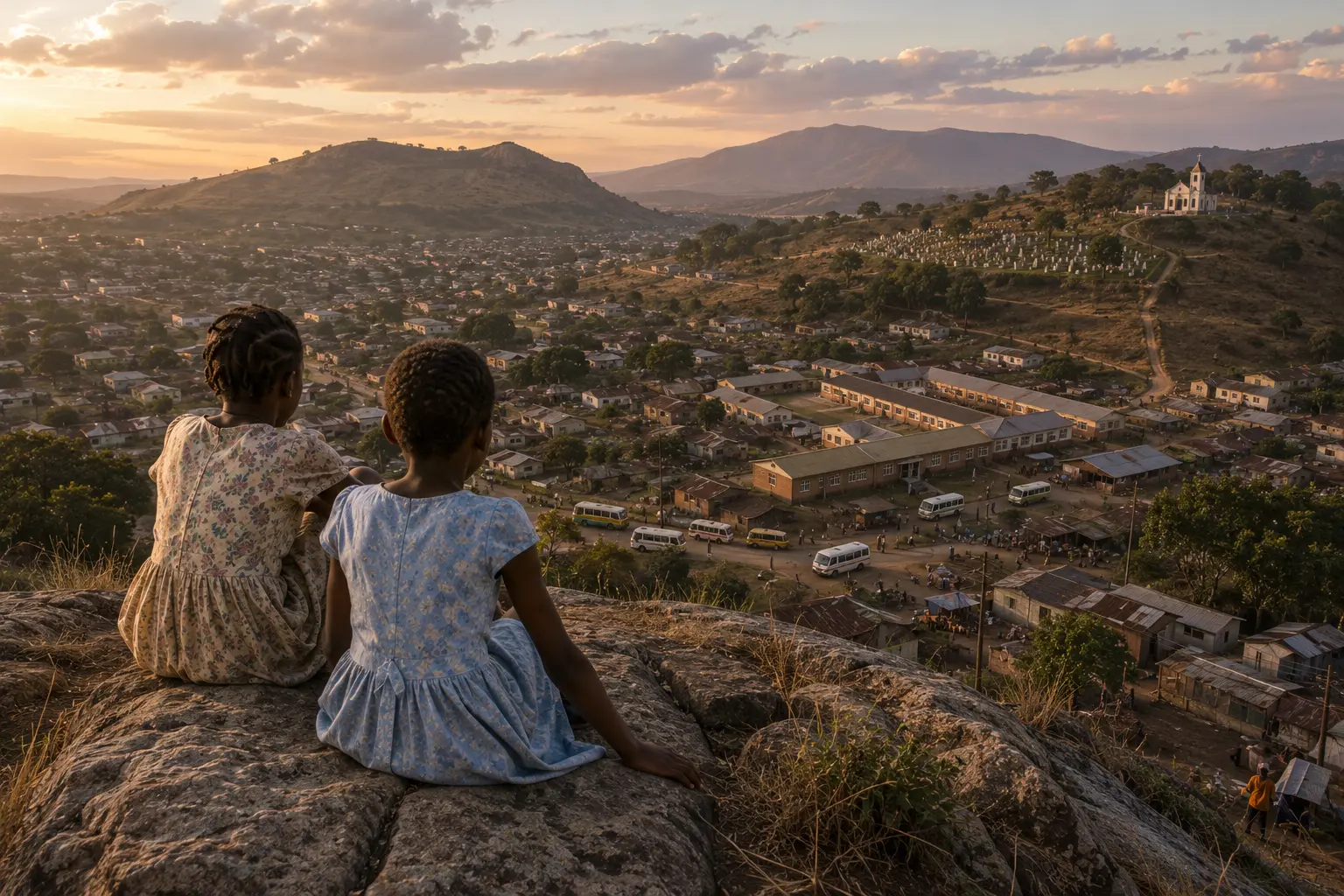
Look carefully behind the school blocks and we may spot children who are supposed to be somewhere else.
Truants.
Leave them alone.
The township will provide the soundtrack.
Music comes from different houses, genres competing with one another without anybody apparently having agreed to enter a competition. Household smells drift through the air and mix before reaching us.
Kombis flow up and down the roads. Conductors hang from the doors, calling destinations and assorted other things to anybody who might be persuaded aboard.
If we are lucky, the bin collectors will come through.
Bins are lifted, emptied and banged down amongst a chorus of sounds.
They must be enjoying this job.
When we have sat long enough, I'll take you slightly north into the middle of Sakubva.
We're going to Saurombe.
Buy some chuck steak from the butcher.
Outside, someone will braai it for us. We don't necessarily need to know him. Give him the meat. He knows what to do.
We'll sit on drinks crates while we wait.
You can have a cold Zambezi lager.
Or, if you're brave, try supa — a cousin of Chibuku, the traditional brew that occupies that useful territory somewhere between food and drink.
Then we'll walk.
Past Beit Hall.
We won't go in.
Through Mundembe and Zororo, leaving the service station on our right before turning left towards the stadium.
I know that stadium.
School sports competitions happened there. Music shows. Football.
I went there to watch our local team when it was Tanganda FC, later Mutare United.
Tanganda carried a name familiar across Manicaland, not least through the tea estates of Chipinge.
This is the Mutare I would show you.
Not because it is the prettiest route.
Because it is alive.
Sakubva was overcrowded even when I lived there. I would not pretend otherwise. It wasn't beautiful in the conventional sense.
But things worked.
There were functioning amenities. People managed. Children went to school. Families lived, cooked, argued, played music, watched football, caught kombis, visited one another and got on with life.
There was enough space in our lives for things that served no practical purpose at all.
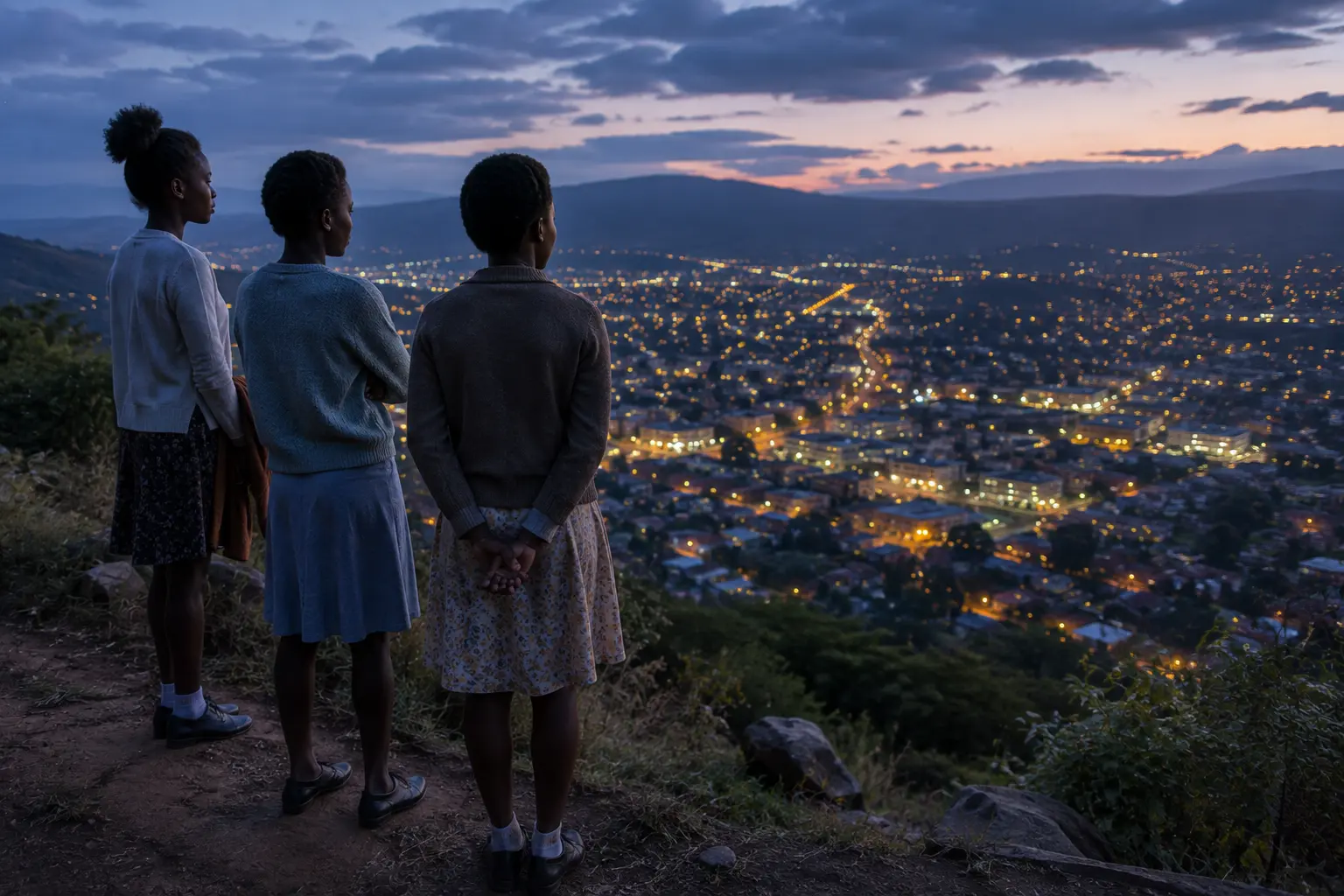
As teenage girls, my friends and I sometimes walked up Christmas Pass.
We must have been between thirteen and sixteen.
Nobody was taking us on an excursion.
We simply walked.
Sometimes we stopped for a sing-along. Sometimes we talked. Sometimes we let our eyes wander across the landscape.
The aim was to reach the top.
On the way we could sit near the sign welcoming travellers to Mutare.
We had no cameras.
No photographs exist of those expeditions that I know of.
Our brains did the recording.
And we waited for the lights.
As evening settled, Mutare began switching itself on beneath us.
White.
Red.
Green.
Yellow.
We argued about them.
There are more red ones tonight.
No, there aren't.
Look over there.
Sometimes we couldn't see the Sakubva lights very well. The township could appear darker while the suburbs and city centre shone more brightly.
We noticed.
Then carried on looking.
Nobody wrote anything down.
Nobody took a photograph.
Nobody needed proof that we had been there.
The memory made its own imprint.
If I brought you to Mutare today, there are things I would struggle to show you in quite the same way.
Sakubva is more overcrowded now. Amenities that once functioned have deteriorated or disappeared. Places have expanded and changed. Some landmarks and features that once formed part of our everyday geography have gone.
The natural beauty remains — mountains do not abandon a city because its services are struggling — but beauty can become difficult to enjoy when people's basic needs are pressing harder.
I sometimes wonder whether a group of girls would now think to walk up towards Christmas Pass simply to watch the lights come on.
Perhaps they do.
I hope so.
Because Christmas Pass remains my unmistakable announcement of home.
Approach Mutare and there it is: the road negotiating those mountains, mist sometimes resting above them, the air changing, the city beginning to reveal itself.
I have travelled far beyond it now.
Yet home retains peculiar ways of finding me.
Sometimes it arrives as landscape.
Sometimes as language.
Sometimes as the memory of friends sitting beside me with nothing more urgent to do than argue about the colour of lights.
And sometimes I am standing in a kitchen in Britain with a packet of imported madhumbe.
They are drier than I would like.
They have travelled too far.
I wash them.
Cook them.
Make my tea.
Then I close my eyes.
For a moment, I need no photograph.
I can see the Pass.
The girls are still there.
And below us, the lights are coming on.