The Road to the Sunshine City
Yaya Nyari
Going to the city began long before the bus arrived.
There would be talk about the impending journey. Friends would know. Cousins would know. Somewhere amongst all this informing of people who had no practical need to know, there may have been a little bragging.
I had travelled.
I had been to Mutare City, sometimes twice in one year.
And every year or two, I went further.
I went to Harare.
For a village child, this was no small thing.
The first leg was the ZUPCO bus from the village into Mutare, a journey of about an hour. There was plenty to occupy me. I waved at the passing world and its cats. I watched trees apparently hurtling in the opposite direction and counted cattle in the fields.
I also took considerable pride in completing the entire journey without once needing the toilet.
Other children sometimes asked to go, creating what seemed to me the dreadful possibility that the driver and all his passengers might have to be inconvenienced because of one child's bladder.
I was not one of those children.
Still, the ZUPCO journey was merely preparation.
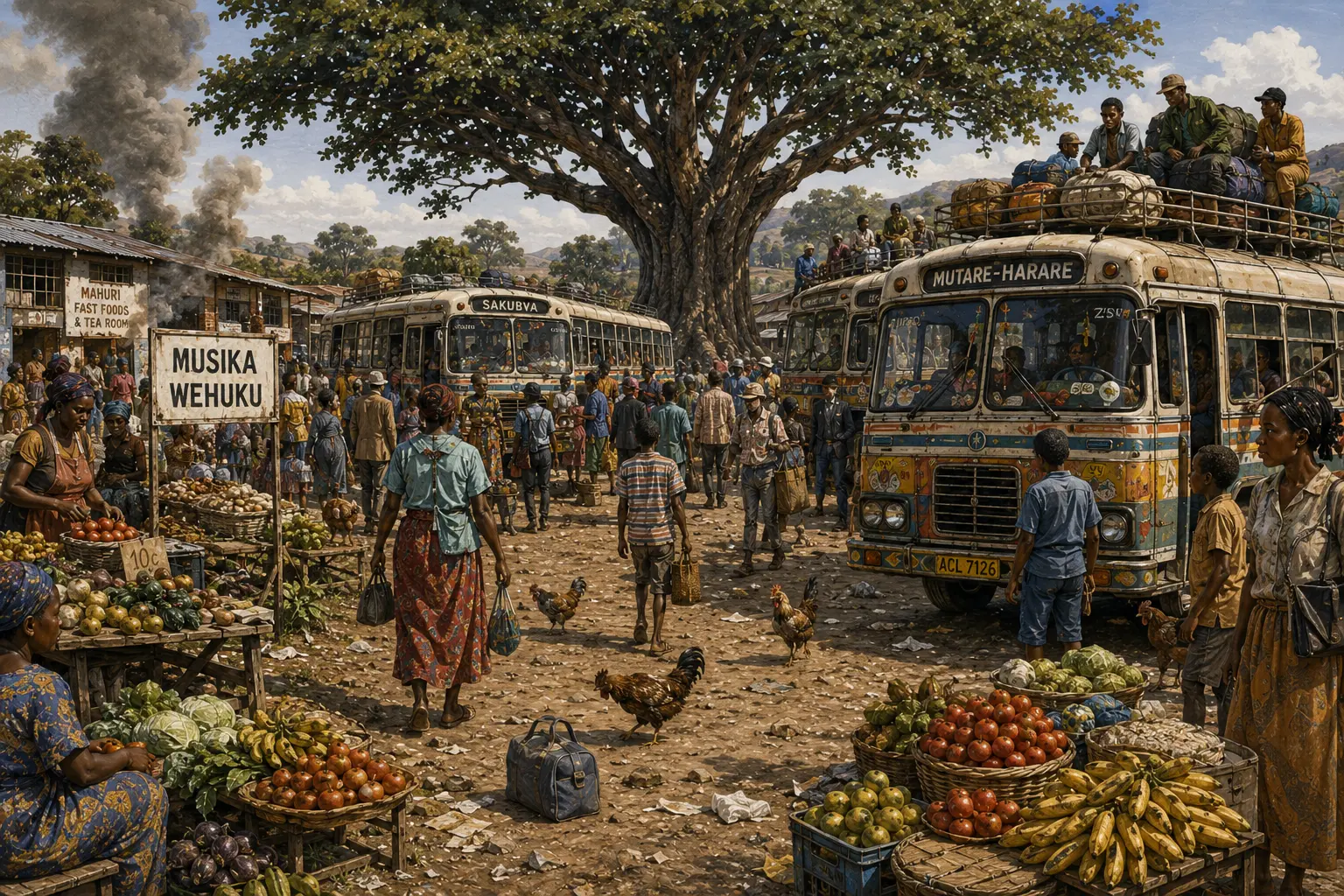
The giant step came at Sakubva Bus Terminus.
Everything there seemed enormous.
There were buses everywhere, belonging to different companies and travelling in different directions. People moved amongst them carrying luggage, produce and children. Traders displayed all manner of things. Different languages and accents folded into one another. Conductors called out destinations. Engines started and stopped. People arrived, departed, shouted, bargained and searched for one another.
And Sakubva had a smell.
It was nothing like the village.
Tar. Diesel fumes. Chimney smoke. Market produce. Food. People. Engines.
I am not sure these were smells one was supposed to enjoy, but I did.
They smelled, somehow, of advancement.
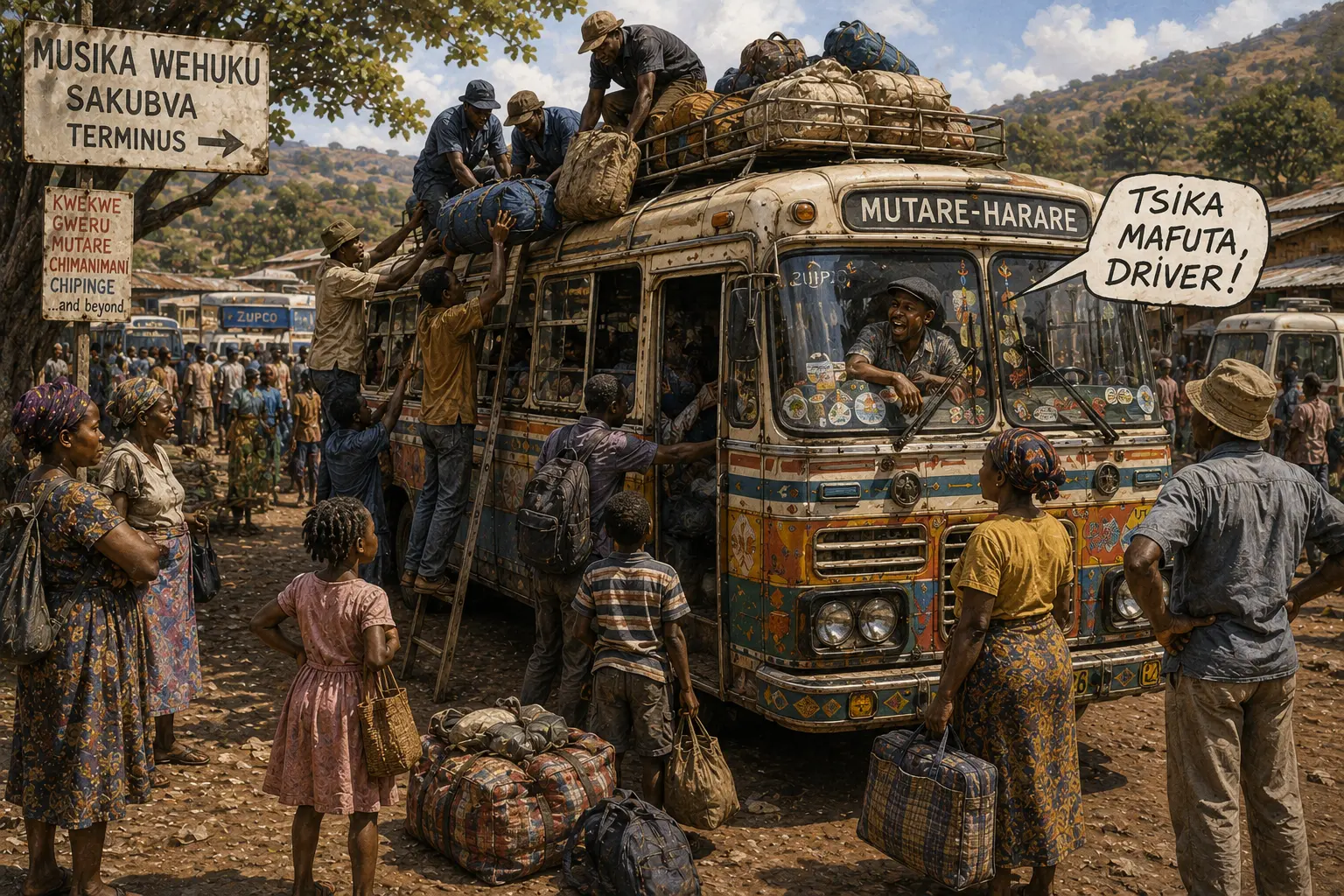
From Sakubva we chose our long-distance bus. There were several companies operating the Mutare–Harare route then, and the competition between them did not necessarily end when the passengers climbed aboard.
Tenda.
Kukura Kurerwa.
Names that meant we were going somewhere.
Luggage was loaded onto the carriers above us: suitcases, mattresses, parcels and sometimes livestock. Inside, music played loudly. The buses competed for passengers and for progress along the road, racing towards the next stop while some of those already aboard enthusiastically encouraged the driver.
Tsika mafuta, driver!
Put your foot down.
As children, we needed no convincing that this was tremendous fun.
Then we climbed towards Christmas Pass.
The road curved through the mountains above Mutare, negotiating a landscape I already knew belonged to home but which seemed transformed when viewed from a bus beginning a much longer journey.
Christmas Pass was beautiful.
It still is.
There are landscapes one appreciates because they are beautiful, and others whose beauty feels personal. Christmas Pass belongs to the latter for me. It is part of the drama of entering and leaving Mutare, and I have always carried a quiet pride in it.
Once through the Pass, the journey opened.
Two hundred and sixty-two kilometres separated Mutare from Harare. I did not measure them that way as a child.
I measured the journey in what passed the window and where the bus stopped.
If darkness came, lights appeared in the distance and then gathered as we approached settlements. They fascinated me. Against the darkness they seemed almost magical.
And then there was Headlands.
Headlands meant we were somewhere around halfway, but more importantly it meant food.
The roadside offerings were vast. Boiled eggs, fruit and sweet potatoes were amongst the less adventurous possibilities. There might also be tiny fire-roasted birds, mice, flying ants or crickets.
We bought what appealed.
Whatever was bought was shared.
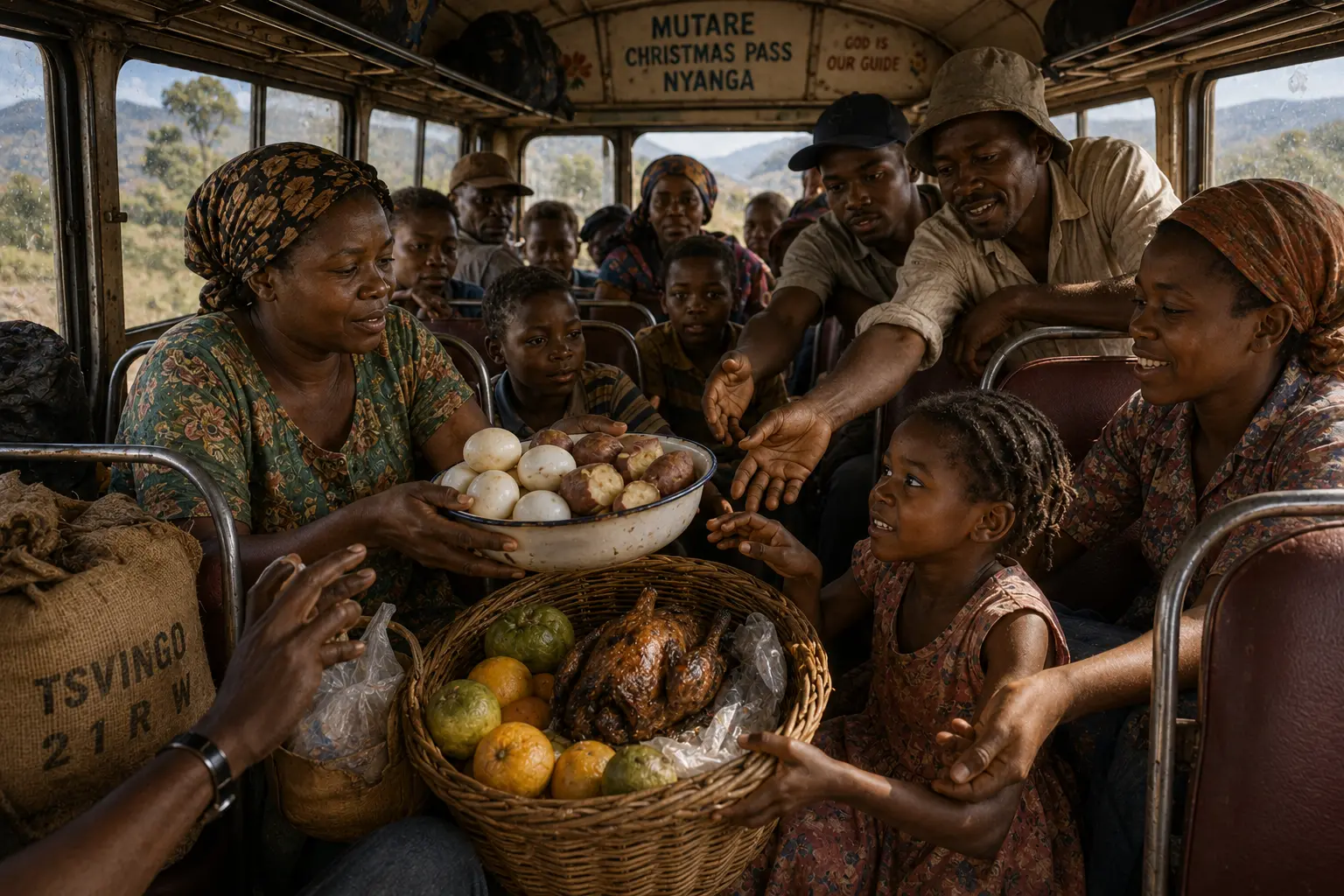
A tiny roasted bird presented no particular mathematical difficulty simply because several people wanted some. Somehow it divided.
Hands reached in.
Food passed around.
We ate.
There was no hand sanitiser.
There were no refreshing towels.
It was simply yummy.
Then everybody climbed back onto the bus and the competition resumed.
The next landmark that mattered greatly to me was Marondera — Marandellas, as it had previously been known.
Marondera meant one hour to Harare.
Now I watched more carefully.
There were better structured houses. The roads leading towards the townships looked different from those I knew in Mutare. Buildings, traffic and the general surroundings seemed to announce that we were approaching somewhere important.
Civilisation, I thought.
The word belonged easily to the way I understood the world then.
City people seemed different too.
Amongst us children there was a belief that people from the city smelled better. Their skin seemed smoother. Their hands were softer.
Naturally, some of us had ambitions.
Village life was not particularly helpful in achieving the required finish. Bare feet travelled through dust, mud and sometimes cow dung. In dry weather the skin could develop its own unmistakable evidence of where it had been.
There were measures one could take.
Wash more often.
Apply Vaseline.
Keep shoes on.
Stay in the shade when possible rather than spending the entire day beneath the sun.
The aim was not formally discussed as far as I remember, but we understood what was required.
A well-travelled child returning from Harare should preferably look as though something had happened to her.
There were limits, of course. Village life would resume soon enough.
But first there was Harare.
By the time the bus entered the capital, the scale had changed again. More buildings. More vehicles. More people. More lights.
The Sunshine City.
After the great journey from Mutare, there was still one final, much shorter bus ride to Auntie Sarah's place.
And somewhere during that last stretch, the instructions began.
We were to be quiet when we arrived.
We were not to go to the main house unless invited.
We would be shown where we could play.
If we needed help while Auntie Sarah was working, we would be told whom to ask.
The other people living in the staff quarters would be introduced to us, usually that same day, because Auntie would be at work the following morning.
Their employment or relationship to the household did not matter much to us.
They became Auntie So-and-so.
Uncle So-and-so.
By then the village was more than two hundred and sixty kilometres behind us, beyond Marondera, Headlands, Christmas Pass and the giant bus terminus at Sakubva.
But somehow, even here, amongst unfamiliar houses, unfamiliar smells and people we had never met before, the old arrangement reappeared.
Adults were identified.
Children were allocated places to be.
Someone would know where we were.
Someone would feed us.
Someone would intervene if necessary.
And Auntie Sarah would make room.
We had arrived in the Sunshine City.