Auntie Sarah's Sunshine City
Yaya Nyari
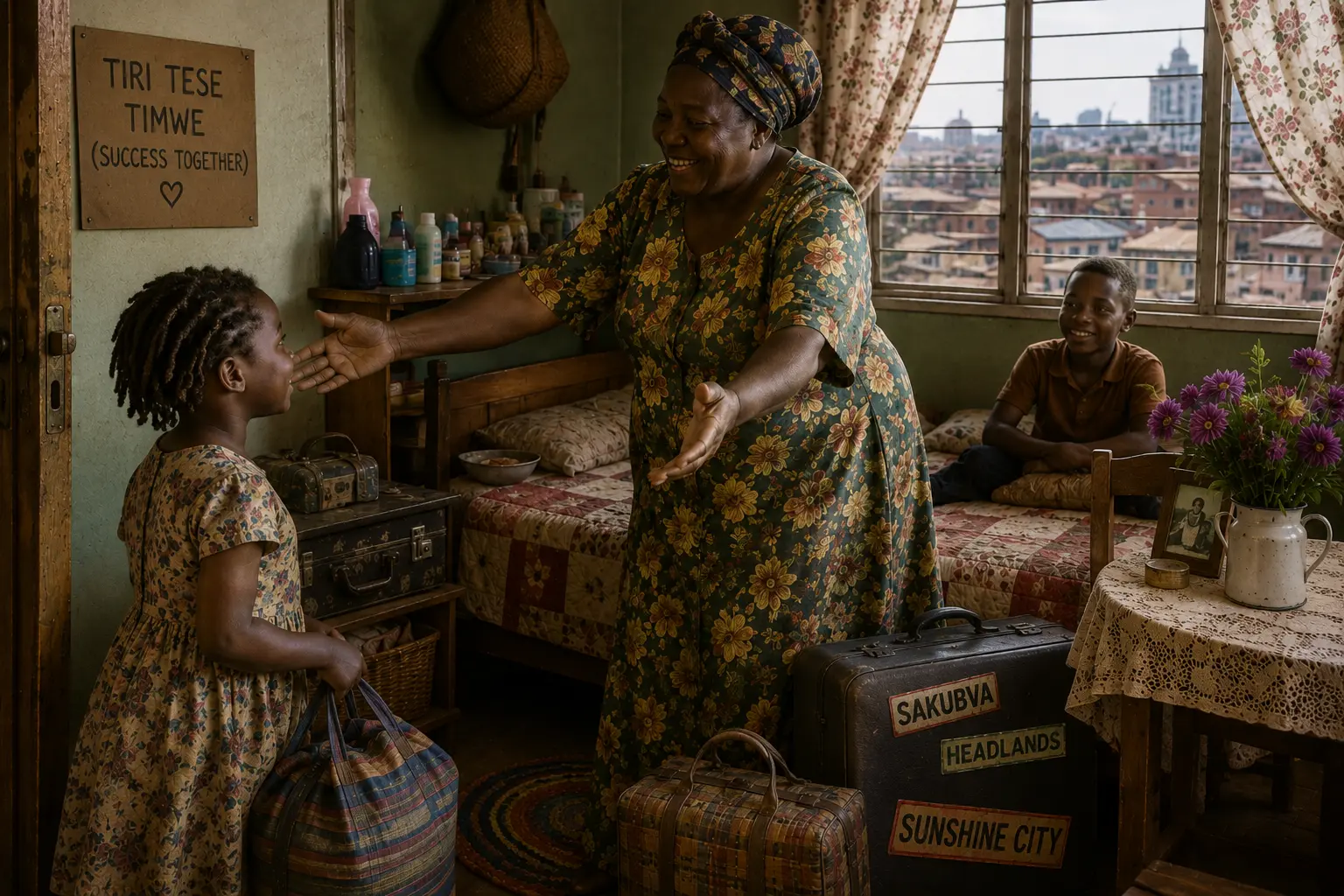
Auntie Sarah was not a woman one would readily associate with pity.
She was formidable, astute and enterprising, fiercely proud of her family and equally proud of her work. She worked as a housemaid for a wealthy white family in one of Harare's leafy suburbs and was a trusted servant in their home.
As children visiting from the village, we knew very little about what being trusted in that way required. What we knew was Auntie Sarah.
And Auntie Sarah made things happen.
Her employers sometimes gave her things they no longer needed or wanted: clothing, furniture, vases, kitchen equipment, perfumes and other valuables. She took pride in these gifts and occasionally showed them to us. Some she shared amongst the wider family, including her nieces. Others travelled with her back to Dora, where she had built and furnished her own beautiful home.
There were parts of that village house that seemed to carry echoes of the large Harare home in which she worked, only at a different scale.
In that way, Auntie Sarah brought a little civilisation to the Kadira homestead.
That was how I understood such things then.
But during the holidays, we travelled in the opposite direction.
We went to her.
Auntie Sarah's accommodation in Harare consisted essentially of one square room in the staff quarters behind her employer's house.
At one end stood her double bed and wardrobe. A curtain hung across the room somehow — I cannot remember how she attached it to the ceiling — separating the sleeping area from the other half.
On the kitchen side was a cupboard for plates and crockery. Shelves held glasses and cups, as well as a two-plate electric hob. Beneath it stood a Primus stove, ready when needed.
There was no oven.
You entered through an uncovered area that I suppose could generously be called a porch. The quarters appeared to be semi-detached. Outside was a shared sink, and there was a toilet with an overhead shower.
When nieces and nephews arrived for the holidays, Auntie Sarah made room.
The curtain helped.
We were comfortable.
That matters to me when I remember it now. The dimensions of the room are one truth. Our experience of being there is another.
We were well fed and watered. Auntie Sarah and her friends took us on adventures. Other occupants of the staff quarters had already been introduced to us as aunties and uncles, and they looked out for us while she worked.
I do not remember sitting there wishing to go home.
There was far too much to see.
The staff quarters were tucked away behind a partial wall and shrubbery. From the main house, I imagine much of this little world was conveniently obscured.
Our view worked rather differently.
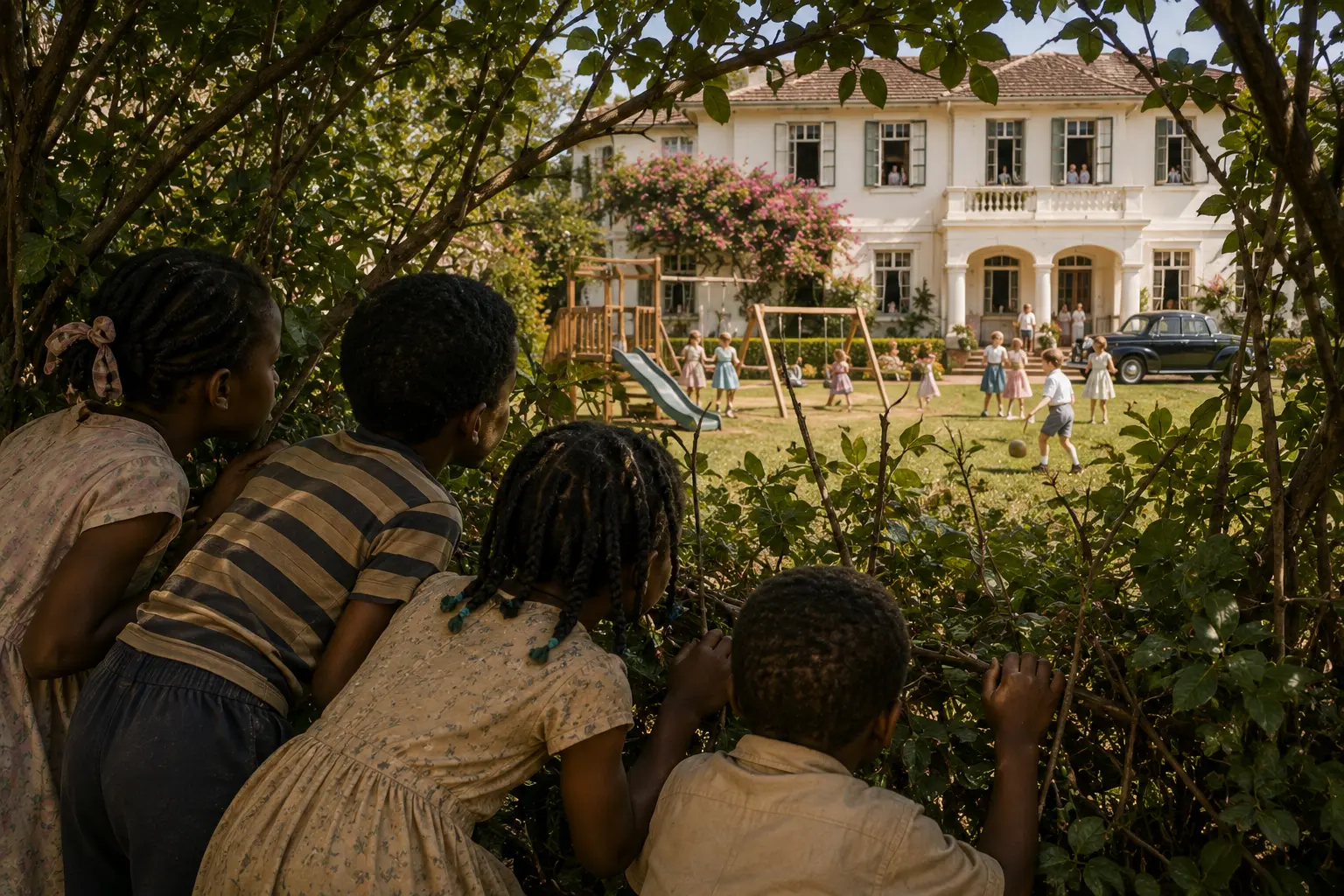
We could leave the quarters and hide amongst the bushes to peep at what seemed to us to be a mansion.
The house fascinated me.
So did the children who lived there.
They had toys unlike ours — dolls, wooden trucks and other things made for play. Outside were swings and slides and equipment that seemed astonishing to a child accustomed to creating games from whatever the village supplied.
I watched.
There was no conversation between us that I remember. Language itself would have made that difficult for me then. There was no touching the toys, no joining the games.
Just curiosity from a distance.
Then there were the smells.
Food cooked differently there. Cakes baked in an electric oven and released sweet smells that seemed almost luxurious compared with the smoky scents of cooking fires at home.
The contrast was impossible not to notice, even if I did not yet possess the language to explain it.
A large house stood on one side.
Behind the wall and shrubbery stood the workers' quarters.
There was a gardener, a cook, Auntie Sarah and other black employees. Their lives made the large household function.
Yet within the quarters another community existed.
People talked. Food was shared. Adults kept an eye on whichever children were around. If Auntie Sarah was working, somebody else knew who we were and where we belonged.
The arrangement was strangely familiar.
The village had followed us to Harare.
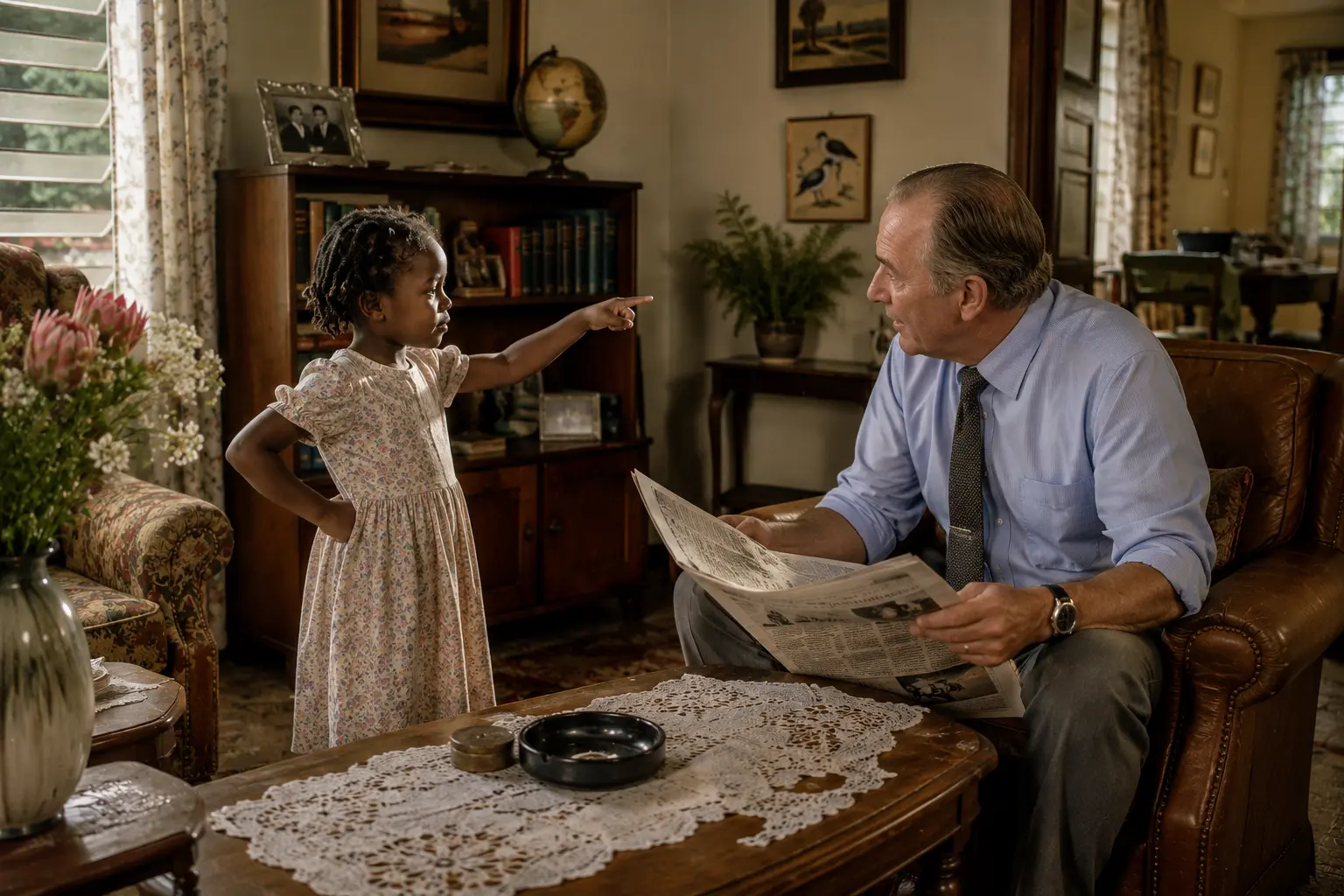
There was one occasion when Auntie Sarah needed her employer urgently. She had apparently spotted something in the garden — perhaps an unusual butterfly, frog or plant — and wanted him to come and see it before it disappeared.
She sent me to fetch him.
This presented a difficulty.
I did not have enough English for the assignment.
I knew what Auntie Sarah called him.
Baas.
I found him sitting with his paper. He was a tall, slim Australian man with dark brown hair and warm features.
I delivered the message using every linguistic resource available to me.
"Baas, come here. Nditete."
Boss, come here. Auntie says.
There may also have been urgent hand gestures.
Whatever combination I produced was sufficient. He smiled, put down his paper and followed me.
Mission accomplished.
My family has found considerably more entertainment in this incident over the years than I have considered necessary.
Apparently, there was a more respectful way in which a small black child with limited English should have summoned her aunt's white employer.
Nobody had explained it to me.
Auntie Sarah had said call him.
I called him.
There were other adventures beyond the shrubbery.
Auntie Grace worked at a hospital as a staff nurse aide, and her partner was involved with horse racing. On one visit she arranged for us to be collected from Auntie Sarah's and taken to Borrowdale Racecourse.
What an experience.
Perhaps taking children somewhere people gambled would raise questions now.
I loved it.
We chose horses. We watched them gallop towards us and thunder past, continuing away as the crowd responded around us.
Borrowdale was another leafy part of the city, and the racecourse seemed predominantly a white man's world. I remember few black spectators and no black jockeys.
Again, I noticed.
I did not need to understand everything I noticed.
That came later.
What mattered then was that Auntie Sarah and the other adults around her had opened a world considerably larger than the one I knew.
And eventually the holidays ended.
We travelled back through Harare, Marondera, Headlands, Christmas Pass and Mutare, towards Dora and the Kadira compound.
We returned with our belongings.
Perhaps something Auntie Sarah had given us.
Skin carefully moisturised with Vaseline.
Feet that, with sufficient effort and continued use of shoes, might temporarily conceal some of the evidence of village life.
And stories.
So many stories.
Stories about the enormous houses.
The toys.
The cakes.
The horses.
The city.
The people.
The adventures.
I do not remember returning home feeling that Auntie Sarah possessed less than the people in the mansion.
I remember being proud that she was my auntie.
She had shown us the Sunshine City.
And we had been there.